
Can you get a mortgage for a prefab house?
Published on 9 July 2026 · Updated on 24 September 2026 · Moduly Homes
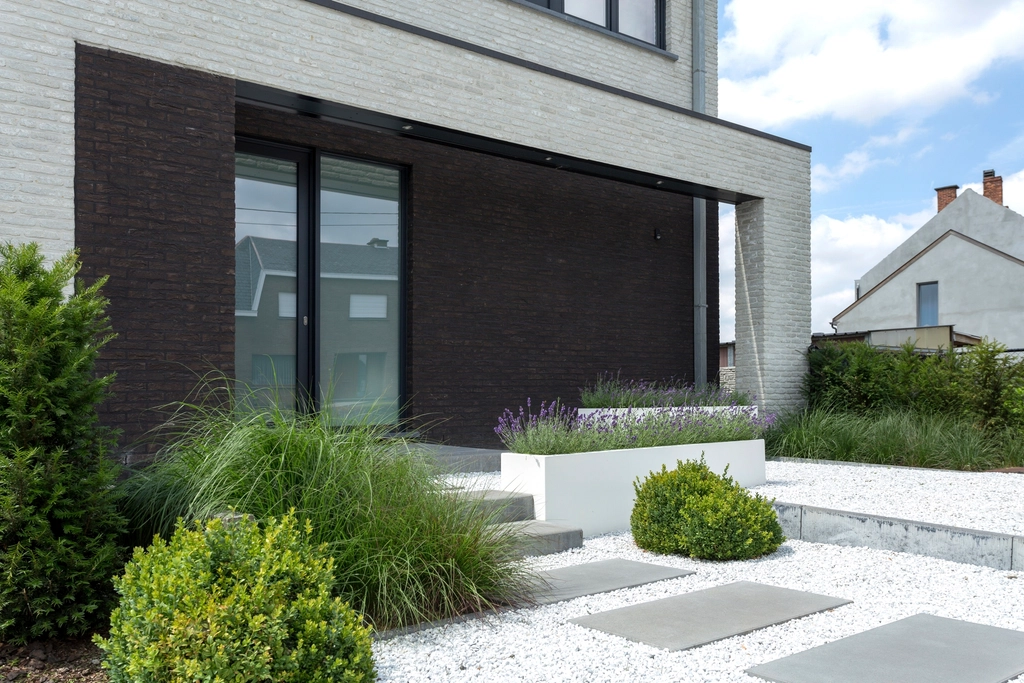
In Spain, you can get a mortgage for a prefab house, and what decides it is neither the material nor the factory: it is whether the house stays for good where you put it or can be taken somewhere else. Here you will see what the bank checks before saying yes, how it releases the money while the house goes up, where that clashes with what the manufacturer charges and what is left when there is no mortgage.
Quick answer
Yes, if the house is real estate: anchored to land you own, with a permit and with the new build entered in the Land Registry. If it can be moved without breaking it, it is movable property and cannot be mortgaged.
It is financed as a build, not as a purchase: the self-build mortgage lends against the valuation of the finished house (usually up to 80%) and releases the money as the work is certified.
The prefab clash: whatever you pay the manufacturer while it builds the house in its workshop goes out before there is any work to certify on your plot. And BBVA, for example, excludes prefabs from its self-build mortgage.
Without a mortgage, a personal loan, and a much dearer one: consumer credit costs 7.59% APR on average, against 2.94% for home loans (Banco de España, June 2026).
To work out how much to borrow: 100 m² turnkey comes to about €164,000 at the market median, not counting the land or whatever the price leaves out.
| The house | Mortgage? | How it is financed |
|---|---|---|
| Anchored to your plot, with a permit | Yes | Self-build mortgage |
| Finished and entered in the Land Registry | Yes | Mortgage like any home |
| On rural land, without a home permit | No | None until it has a permit |
| Mobile home or tiny house on wheels | No: it is movable property | Personal loan |
| On a rented plot | No | Personal loan |
Mortgage for a prefab house: what decides is whether it is real estate
Only real estate can be mortgaged (article 106 of the Mortgage Law): whatever cannot be removed from the ground without breaking it, according to the Civil Code (article 334).
- Real estate: anchored to a foundation on land you own, with a permit and the new build registered, whether timber, concrete, steel or a container.
- Movable property: it can be taken elsewhere without breaking it, like a house on wheels. The Supreme Court requiring it to have a permit (ruling of 5 December 2024) does not make it real estate.
The same line decides the VAT: 10% if it is permanently fixed to the ground, 21% if it can be moved without being broken (ruling V5259-26 of the Directorate-General for Taxation, July 2026).
What the bank asks for
The same as for a conventional house, and almost all of it is paperwork you already need to build:
- The land in your name and registered, on land where a home is allowed (which permit you need is in permits for a prefab house).
- A stamped project, a building permit and a budget.
- A valuation by a firm approved by the Banco de España. You pay for it, and the bank has to accept one you already have that has not expired.
The notary, registry, agency and the tax on the deed are paid by the bank. And it must give you the FEIN, the sheet with the terms, at least ten days before signing.
The self-build mortgage: the money comes in stages
The usual formula is the self-build mortgage (hipoteca autopromotor): the bank lends against the valuation of the finished house, usually up to 80%, and releases the money in stages.
- You draw it in proportion to the work done, against certificates from the site architect that the valuer checks.
- The last payment comes with the house finished, its first occupancy permit and the building registered.
- Meanwhile, you pay only the interest on what you have drawn.
Check how long that period lasts: in Caja de Ingenieros' template, if it ends before the work does, whatever you have not drawn goes to pay down the loan. Real timelines are in how long a modular house takes.
Where it clashes with a prefab: the payments to the manufacturer
A conventional house grows on your plot and the bank pays as it grows; a prefab is largely made in a workshop:
- If the manufacturer charges on signing or as it builds, that money goes out before there is any work to certify on your plot: either you advance it yourself, or you agree payments by milestones the bank can check.
- Some banks do not accept it: BBVA warns that its self-build mortgage does not take prefabricated houses.
Before signing with the manufacturer, ask the bank whether it accepts it and how it certifies what is made off the plot. How to split the payments is in a prefab house step by step.
How much to borrow: the finished house, and what its price leaves out
The bank values the finished house on your land, not the advertised price:
- A turnkey house comes to a median of €1,639/m² (137 houses from 21 manufacturers); by material and size, in the price per m² comparison.
- Many of those prices are a “from” (50 of 189).
- The foundation is included in the price in 42 of those 189 houses, and VAT in 8. Whatever is not included, add it, along with the land, the utility connections and the permit.
And a small project may not reach the bank's minimum amount, which idealista puts at about €50,000. Quite a few houses cost less than that (40% of those with a published price).
When there is no mortgage, and how to pay instead
If the house is movable property, or sits on a rented plot, there is no mortgage:
- Personal loan: the route for mobile homes and tiny houses, and a much dearer one: the average rate for consumer credit is more than double that for home loans, according to the Banco de España.
- Mortgage at the end: if the house ends up anchored and registered as a home, it can then be mortgaged, and that mortgage can pay off the loan for the build, if a bank grants it.
Each bank decides: compare them before signing with the manufacturer
No condition is universal: each bank decides how much it finances, over how many years, how much savings it asks for and whether it accepts a prefab. The material hardly matters.
Compare offers with the project and the manufacturer's budget in hand: the more items it includes, the fewer payments are left loose. Atlántida Homes' Era (in Spanish) and MasArea Modular's Guadarrama (in Spanish) include the project, the permit and the foundation; The Corten Company's Guadalquivir (in Spanish), a container house, the project and the foundation, but not the permit.
If the house is going to stay anchored on land you own, prepare it as a building project and talk to the bank before signing with the manufacturer; if it can be moved, plan on a personal loan. Then compare models and prices on Moduly Homes.
Frequently asked questions
Can you get a mortgage for a prefab house in Spain?
Yes, if it is real estate: anchored to land you own, with a building permit and with the new build entered in the Land Registry. If it can be moved without breaking it, like a house on wheels, it is movable property and is financed with a personal loan. The material does not change the answer.
How much does the bank finance?
Usually up to 80% of the valuation, according to the Banco de España, although each lender sets its own policy. For self-build they tend to ask for more savings: BBVA speaks of contributing between 30% and 40% of the total. And banks tend to set a minimum amount, which idealista puts at about €50,000.
What if the manufacturer asks me to pay before the bank releases the money?
Then you advance that money yourself, because the self-build mortgage pays according to certified work, and what is made in a workshop is not yet on your plot. Before signing, ask the bank how it certifies that stage and agree payments by verifiable milestones with the manufacturer.
Can a mobile home or a tiny house be mortgaged?
No, as long as it can be moved without breaking it: it is movable property, and only real estate can be mortgaged. The Supreme Court requiring a permit for it, as for a home, does not change that. It is financed with a personal loan, much dearer than a mortgage.
Can I mortgage a prefab house on rural land?
Only if it can be legalised as a home, and on rural land that is the exception each region sets. Without a permit the new build is not registered, and without registration there is no mortgage. Ask your town hall before buying the plot.
Sources
Most of the sources are official Spanish documents, in Spanish.
- 1BOE. Código Civil (arts. 334 y 335, bienes inmuebles y muebles) · boe.es
- 2BOE. Ley Hipotecaria (art. 106, qué bienes se pueden hipotecar) · boe.es
- 3BOE. Ley 5/2019 reguladora de los contratos de crédito inmobiliario (arts. 14 y 15) · boe.es
- 4Banco de España, Portal del Cliente Bancario. La tasación no solo es un mero trámite (marzo de 2024) · clientebancario.bde.es
- 5Banco de España, Portal del Cliente Bancario. Gastos asociados a la hipoteca · clientebancario.bde.es
- 6Banco de España. Boletín Estadístico, cuadro 19.6: tipos de interés TAE de nuevas operaciones (junio de 2026) · bde.es
- 7Caja de Ingenieros. Minuta de préstamo hipotecario de autopromoción (información precontractual) · caixaenginyers.com
- 8BBVA. Pedir hipoteca para casas prefabricadas (y por qué su hipoteca autopromotor no las acepta) · bbva.com
- 9BBVA. Hipoteca autopromotor: construye tu propia vivienda · bbva.com
- 10idealista/news. Las claves de la hipoteca para una vivienda prefabricada en España (junio de 2024) · idealista.com
- 11Primera Lectura Ediciones. La DGT sobre el IVA de las casas prefabricadas (consulta V5259-26, julio de 2026) · primeralecturaediciones.com
- 12CGPJ. El Tribunal Supremo establece que las «mobile-home» exigen licencia urbanística (sentencia de 5 de diciembre de 2024) · poderjudicial.es
- 13Moduly Homes: catálogo de casas prefabricadas (precio, alcance y qué incluye, según los fabricantes) · modulyhomes.com