
How long does it take to build a modular or prefab home?
Published on 9 July 2026 · Updated on 3 October 2026 · Moduly Homes
A modular home takes considerably less time than a conventionally built one, and most of that time is not set by the factory: it is set by paperwork, above all the town hall's building permit. Here you will see how long each phase lasts, what can run at the same time and what drags the wait out, so you know which timeline to ask for in writing.
Quick answer
5 to 10 months from signing to moving in. A conventionally built house takes 12 to 24.
The building permit is what takes longest (a month and a half to four months), and it is what varies most from one town hall to the next.
The factory is the short, predictable part (4 to 12 weeks), and while it works, the foundations are laid on your plot.
The timeline the manufacturer promises depends on what you buy: a kit is delivered in a median of 7 weeks (124 houses) and a turnkey home in 22 weeks (152 houses).
To keep it short: request the planning information before buying the plot, choose a lightly modified model and ask when the manufacturer's timeline starts counting.
| Phase | How long | When |
|---|---|---|
| Technical project | 4 to 8 weeks | First |
| Building permit | 1.5 to 4 months | Once the project is stamped |
| Factory manufacturing | 4 to 12 weeks | Once the permit is granted |
| Foundations and utility connections | 2 to 5 weeks | Alongside the factory |
| Transport and assembly | A few days to 3 weeks | When it leaves the factory |
| Hook-ups and finishing | 2 to 4 weeks | After assembly |
| First occupancy | Up to 6 weeks | At the end |
How long does a modular home take? Less than a conventional build, and why
The house is built in a workshop, not on your plot, and that changes the schedule in two ways:
- Factory and plot work at the same time. While the walls are built and the services installed in the workshop, the foundations are laid on your land and water, electricity and drainage are brought in.
- All that is left on the plot is assembly and finishing, not building the whole house.
What does not overlap is the paperwork: project, permit and first occupancy come one after another, and they decide whether your timeline ends up at the low end of the range or the high end.
The permit: what takes longest and varies most
There is no single deadline in Spain. Each region sets its own and, if it does not, the town hall has 3 months from when your application comes in (Law 39/2015).
- The clock stops every time they ask you to correct paperwork, and it does not start again until you hand it in.
- If they do not reply, the answer is no. Spain's Land Law requires an express permit to place a prefabricated house, with negative silence: without a decision you cannot start.
- The same house can wait much longer for its permit in one municipality than in the next one.
Which documents it requires, and in what order, in what permits a prefab house needs.
The factory: weeks, and better with the permit in hand
Manufacturing is the most predictable phase: it happens indoors, without depending on the weather or on coordinating trades, and even some interior finishes are completed there.
What about manufacturing while the permit is being processed? It can be done and it saves weeks, but it is a gamble: if the permit is refused or granted with changes, you have a finished house that does not fit, and a good part of it paid for if the contract bills as the factory progresses. Some manufacturers, in fact, only start counting their timeline once you have the permit. The full order, with what you pay at each step, is in prefab house step by step.
Assembly: days, and then the finishing
Because the house arrives almost finished, assembling it takes days or a few weeks, depending on how many modules it has and how easy it is to get the crane in:
- 1Transport of the modules or panels to the plot.
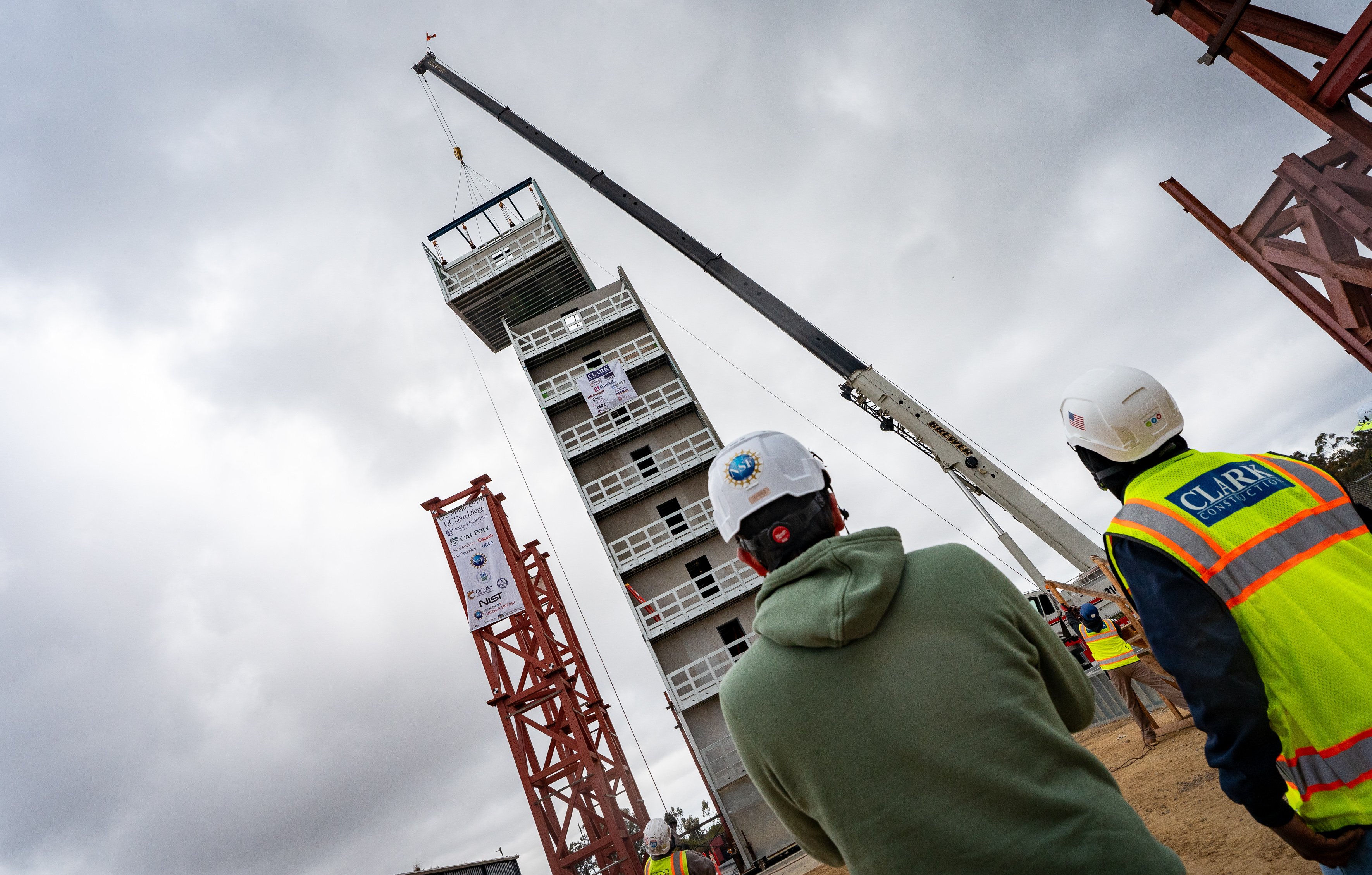
- 2Lifting by crane and anchoring to the foundations.
- 3Joining the modules and connecting water, electricity and drainage.
- 4Final touches and finishes.
Assembled does not mean habitable. You still need the certificate of completion and first occupancy, which depending on the region is a licence, a habitability certificate (cédula de habitabilidad) or a responsible declaration. Without it there are no permanent utility supplies. A responsible declaration is valid from the day you file it; a licence or a cédula adds a few weeks of waiting.
The timelines manufacturers promise
It depends on what you buy. A kit is delivered in a median of 7 weeks (124 houses) and a turnkey home in 22 weeks (152 houses). That makes sense: the kit is the materials, and the assembly is up to you.
Before comparing two timelines, ask when they start counting, because each manufacturer measures it its own way:
- from the order, like the Winnipeg by SODO Casa (in Spanish) timber kit, which adds manufacturing and transport together;
- from when you have the permit, like the Calma steel modular home by Moodul (in Spanish), whose timeline covers manufacturing, transport and installation;
- or from the design stage, with each phase listed separately, like the Guadalquivir container home by The Corten Company (in Spanish).
If a manufacturer does not publish any, ask for it in writing in the contract.
What the type of house changes (and what it does not)
The material changes the total very little, because the total is set by the permit. What it changes is how the house arrives and what it asks of your plot:
- Timber: besides finished houses there are kits, and with a kit the real timeline is the delivery plus the assembly you hire. See timber houses.
- Concrete: there are no kits, and its parts are heavy: it needs a large crane and access for a heavy lorry. See concrete houses.
- Steel (steel frame): light profiles cut in the workshop, quick to assemble. See steel houses.
- Container: the module already exists and is converted in the workshop; on the plot it needs a crane and room to unload it. See container homes.
What makes the timeline longer or shorter
Longer:
- A town hall with a backlog.
- An incomplete application: every request for documents stops the permit clock.
- A difficult plot: a steep slope, poor crane access or ground that needs more foundation work.
- Major changes to the model or special materials, which lengthen the factory stage.
- A plot without water, electricity or drainage.
Shorter:
- Requesting the planning information for the plot before buying it or commissioning the project.
- Choosing a standard or lightly modified model.
- Urban land with services and no planning encumbrances.
- A manufacturer that coordinates project, permit and works.
The timeline you can influence most is the paperwork: request the planning information before buying the plot, and get the manufacturer's timeline in writing, with the date it counts from. With that, compare models and manufacturers on Moduly Homes.
Frequently asked questions
How long does a modular home take from start to finish?
Between 5 and 10 months from signing the contract to moving in, if the permit comes through within a normal time. The factory takes only a few weeks; the rest goes on the project, the permit, the foundations, the finishing and first occupancy.
How long does it take just to manufacture the house in the workshop?
4 to 12 weeks, depending on the system and the size of the house. It is the most predictable phase, because it happens indoors and does not depend on the weather.
How long does assembly take once the house is built?
A few days to 3 weeks, depending on the number of modules and how easy it is to get the crane in. After that come 2 to 4 weeks of hook-ups and finishing, and first occupancy, before you can live in it.
Why does the permit take so long if the house is built in weeks?
Because it depends on the town hall, not the manufacturer. There is no single deadline in Spain: each region sets its own and, if it does not, it is 3 months from when the application comes in. In practice it ranges from a month and a half to four months, the clock stops every time they ask you to correct paperwork and, if they do not reply in time, the permit is deemed refused.
What timeline do manufacturers really promise?
It depends on what you buy: a kit is delivered in a median of 7 weeks (124 houses) and a turnkey home in 22 weeks (152 houses). Always ask when it starts counting: some measure it from the order and others from when you have the permit.
Is a modular home faster than a conventional build?
Yes. A conventionally built house takes 12 to 24 months from start to finish, compared with 5 to 10 for a modular one, because the house is built in a workshop while the foundations are laid on the plot, and assembly takes days. What does not get shorter is the paperwork: the permit is the same for both.
Which modular home is built fastest: timber, concrete, steel or container?
The material changes the total very little, because it is set by the permit. What changes the timeline you are promised is what you buy: a kit, which is just the materials, arrives sooner than a turnkey home, but the assembly is up to you. On the plot, concrete and container homes need a crane and good access for the lorry.
Sources
Most of the sources are official Spanish documents, in Spanish.
- 1BOE. Ley 39/2015 del Procedimiento Administrativo Común (arts. 21, 22 y 69: plazo para resolver, suspensión y declaración responsable) · boe.es
- 2BOE. Texto refundido de la Ley de Suelo y Rehabilitación Urbana (art. 11.4 y 11.5: licencia expresa con silencio negativo y primera ocupación) · boe.es
- 3Mimverd: plazos reales de una casa prefabricada en España, de proyecto a llaves · mimverd.com
- 4Qcasa: tiempo de construcción de una casa prefabricada de hormigón · qcasa.net
- 5Caasa: casas prefabricadas con steel framing · caasa.es
- 6Balticasa: cuánto tiempo se tarda en construir una casa de madera · balticasa.com
- 7Arrevol Arquitectos: en cuánto tiempo se puede construir una casa · arrevol.com
- 8Modular Home: cuánto tarda en construirse una casa modular · modularhome.es
- 9Moduly Homes: catálogo de casas prefabricadas (plazo de entrega que publican los fabricantes) · modulyhomes.com