
A prefab house step by step: the order everything happens in (and when you pay for each part)
Published on 23 August 2026 · Updated on 24 September 2026 · Moduly Homes
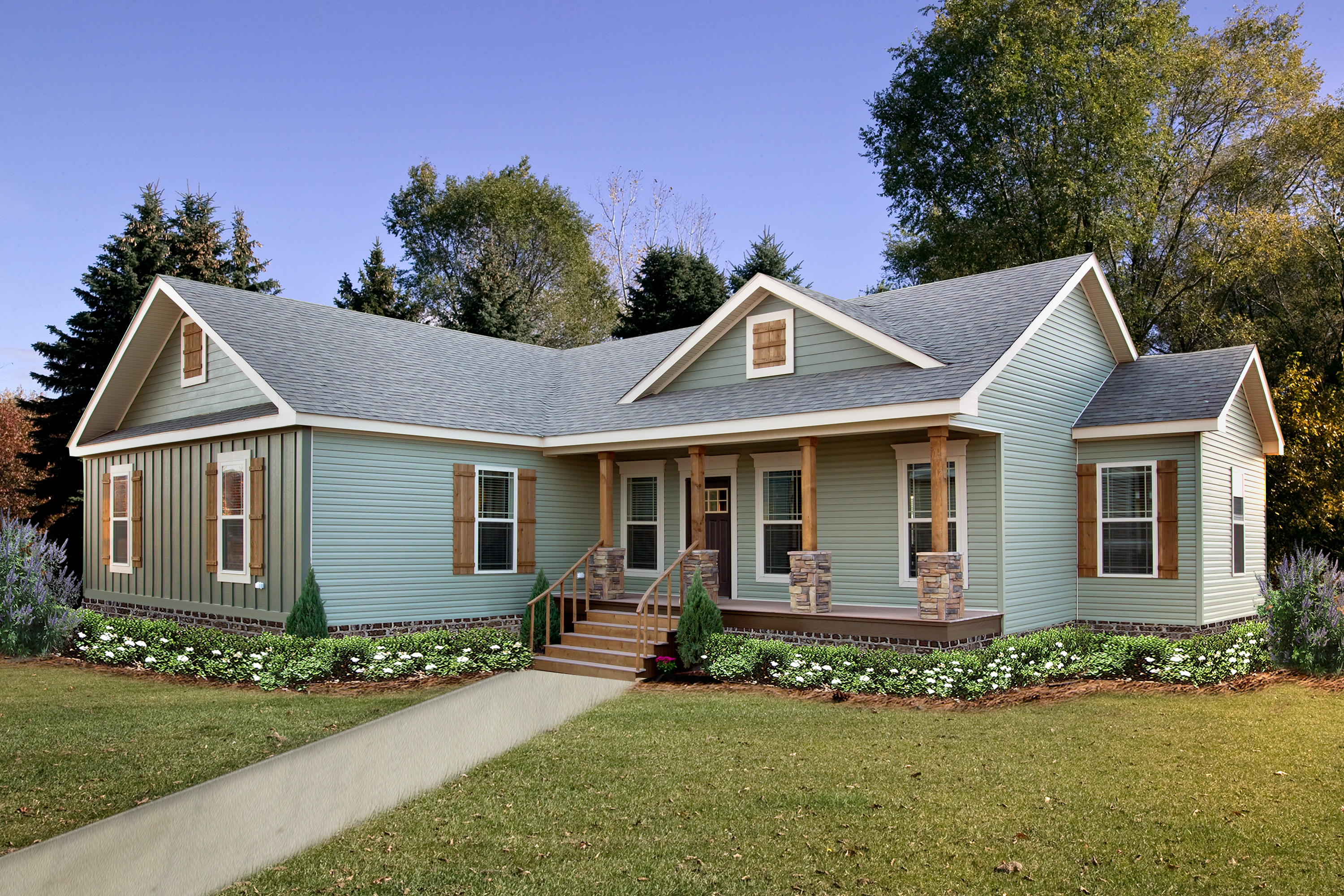
In Spain, a prefab house is built step by step, with the same procedures as any other home, and the order matters as much as the paperwork: each step opens the next one and decides when each payment is due. Here you will find the full sequence, from the town hall to the deed, what you pay at each stage and the risk that hardly anyone mentions: with a prefab house you usually pay a good part of the money up front, without the protection the law gives to someone buying a home off plan.
Quick answer
The order cannot be skipped: planning information → land and soil study → project → permit → manufacturing and assembly → certificate of completion → first occupancy → new-build deed. Bringing a step forward does not remove it: it makes it more expensive.
The advertised price is not usually the finished house: turnkey prices are a minority (34% of houses with a price). The rest are kits, shells or houses with assembly as an extra, or they do not say what they cover.
You pay up front with no safety net: the compulsory guarantee on advance payments (a bank guarantee or surety insurance) protects people who buy a home from a developer, and only from the moment the permit is granted. If the house goes on your own plot, you are the developer.
What the law does not give you, get in the contract: a guarantee for each advance payment, payments tied to milestones you can check and a 5% retention during the first year, which the law itself provides for.
| Stage | What gets settled | What you pay here |
|---|---|---|
| 1. Planning information | What your plot allows, in writing | The fee your town hall sets |
| 2. Land and soil study | Buying the land and studying the ground | Land, transfer tax or VAT, notary, registry and soil study |
| 3. Project | Stamped project and site management | Technical fees |
| 4. Building permit | Express permit from the town hall | ICIO (up to 4%) and fee |
| 5. Manufacturing and assembly | Factory, transport, foundations, assembly and utility connections | Most of the house, often up front |
| 6. Completion and paperwork | Certificate of completion, first occupancy, new-build deed, cadastre and registry | Stamp duty (AJD), notary, registry and the 5% retained |
A prefab house step by step: the full order, from the town hall to the deed
These are the ten steps, in order:
- 1Planning information on your plot, in writing (it is a right: article 5.d of the Land Law).
- 2Buying the land, after checking the Land Registry extract and the cadastral reference (what to check on the land).
- 3Soil study: the Basic Document SE-C of the Building Code puts it at the start of the project, because the foundations depend on it.
- 4Stamped technical project and site management.
- 5Building permit, with the ICIO and the fees.
- 6Financing, if any.
- 7Manufacturing in the factory and transport.
- 8Foundations, assembly and utility connections.
- 9Certificate of completion and first occupancy permit (or whatever replaces it in your region).
- 10New-build deed before a notary, Land Registry and Cadastre.
Two doors cannot be forced: without a permit, work does not start, and without first occupancy there are no permanent utility connections and no deed for the finished building. What each permit requires is in what permits a prefab house needs.
Why the order decides the money
Because three laws tie each payment to a moment:
- The permit has to be express, and if the town hall does not reply, the answer is no. Article 11.4.c of the Land Law requires it, with negative silence, for “placing prefabricated houses and similar installations, whether temporary or permanent”.
- The ICIO is due when work starts, “even if the corresponding permit has not been obtained” (article 102 of the Local Finance Law). Starting early does not save you the tax: it adds a case file.
- The guarantee on advance payments is born with the permit: the first additional provision of the Building Act requires it “from the moment the building permit is obtained”. Anything paid before that is left out, even in an ordinary off-plan purchase.
The price you see is not the price you pay
Before comparing prices, check what each one covers. A price can mean four different things, and each one is only compared with prices of its own type:
- Kit, just the parts and the plans: median of €403/m² (132 houses from 8 manufacturers).
- Shell only, without installations or full finishes: €649/m² (87 houses from 8 manufacturers).
- Assembly extra, the whole house but not put together: €1,270/m² (68 houses from 11 manufacturers).
- Turnkey, the finished house: €1,639/m² (137 houses from 21 manufacturers).
If a price does not say what it covers, ask in writing before comparing it. Each type, by material and by size, is in the price per m² comparison.
Three timber houses show it: Avrame's Duo 120 (in Spanish) is a kit for €18,848 that you assemble yourself; Naturmaderahogar's Guriezo (in Spanish) is put up for €44,800 (with assembly in Alicante and Murcia), without plumbing, electrics or foundations; and Casas de Madera Yustas' Julia Plus (in Spanish) arrives assembled and with its installations, turnkey from €63,635, but leaves out the foundations, the utility connections and the permit.
What hardly anyone tells you: you pay up front, without the law's safety net
When the house goes on your own plot, you are the developer. Article 9.1 of the Building Act defines the developer as whoever “decides, drives, plans and finances” the building work, including for themselves. The manufacturer is your contractor.
And the compulsory guarantee on advance payments (a bank guarantee or surety insurance, with the money in a separate account) is owed by whoever takes money from the buyers of a home, and it protects those buyers, not someone building their own house. Nobody is legally required to guarantee what you pay the manufacturer.
The risk is not theoretical: one in five companies that entered insolvency proceedings in 2025 belonged to the construction cycle (materials and real estate included), according to the Insolvency Yearbook of the Spanish Association of Registrars. A case from the sector: Modularis & Climad, a prefab house maker in Bergara, was set up in March 2020 with €3,000 of share capital and filed for voluntary insolvency in July 2023.
How to split the payments so you are not left without a house and without money
It is negotiated before signing, not after. Five things you can ask for:
- A bank guarantee or surety insurance for each advance payment. The law does not require it of the manufacturer, but you can make it a condition of payment.
- Payments by milestones you can check, not by dates: module finished in the factory, lorry loaded, house assembled, certificate of completion signed.
- A retention of 5% of the construction cost during the first year after handover, which article 19.1.a of the Building Act provides for as an alternative to the finishing-defects guarantee.
- The right VAT: a house permanently fixed to the ground is a home and pays 10%, like the building work you contract directly with whoever builds it; if it can be moved without being broken, the tax authority applies 21% (ruling V5259-26 of the Directorate-General for Taxation, July 2026).
- The manufacturer's health in the Companies Register (filed accounts, age and share capital) before the first payment. Start with the manufacturers directory.
The order changes depending on what you buy
What you buy does not change the procedures, but it does change who pays for what and when:
- Turnkey: fewer contracts and fewer separate payments, but few houses include the permit in the price (41 of 189 with a turnkey price). And even if the manufacturer handles it for you, you are still the developer.
- Kit, shell or assembly extra: each missing item is another supplier and another payment (assembler, foundations, installations), and coordinating the order becomes your job.
- Mobile homes: wheels do not change the order. The Supreme Court treated them as prefabricated houses in its ruling of 5 December 2024, and they need the same permit.
How the house arrives also matters: in finished modules it is placed in a few days; put up piece by piece on the plot, the works take longer, and so do the payments against construction certificates.
Permit deadlines: what is the same across Spain and what is not
There is no single deadline in Spain for the building permit of a home: each region's planning law sets it and, within it, your town hall. What they all share:
- If the rules set no deadline, it is 3 months (article 21.3 of Law 39/2015), and none exceeds 6 unless a law says so (article 21.2).
- The clock stops every time you are asked to correct documents (article 22.1.a).
Manufacturing and assembly come on top: they are in how long a modular house takes. And if you are going to finance it, first read how a mortgage for a prefab house works: a self-build mortgage is paid out against construction certificates, and that sets your payment schedule.
The order is not red tape: it decides when each euro leaves your pocket and how much risk you take at each stage. Do not pay the bulk before you have the permit, ask for a written guarantee for each advance payment and compare on Moduly Homes what the price of each model really includes before asking for a quote.
Frequently asked questions
In what order are the procedures for a prefab house done?
In Spain: planning information on the plot, purchase of the land, soil study, stamped technical project, municipal building permit, manufacturing, transport, foundations and assembly, certificate of completion, first occupancy permit and, finally, declaration of new construction, entry in the Land Registry and registration in the Cadastre. The two steps that cannot be brought forward are the permit (before starting) and first occupancy (before connecting utilities and recording the finished building in a deed).
When is each thing paid?
In the same order as the procedures: first the planning information fee; then the land, with its transfer tax or VAT, and the soil study; next the fees for the project and site management; then the ICIO and the permit fees, and after that the bulk of the money at manufacturing and assembly. At the end come stamp duty (AJD) on the new construction, the notary and the registry. What is particular to a prefab house is that, in many contracts, the most expensive stage is charged in advance.
Can I pay for the house before I have the permit?
You can, but it is the worst moment to do so. The Building Act requires advance payments to be guaranteed only “from the moment the building permit is obtained”, so anything you hand over before that is left out, even in an ordinary off-plan purchase. And if the town hall refuses the permit, you are left with a payment made and a house you cannot install.
What happens if the manufacturer goes bust with the house half built?
You become one more creditor in the insolvency proceedings, and without a bank guarantee or surety insurance getting the money back is uncertain. The compulsory guarantee on advance payments is aimed at whoever takes money from the buyers of a home; if the house is built on your plot, the law considers you the developer (article 9.1) and that protection does not kick in by itself. That is why it pays to agree a guarantee, verifiable milestones and a retention before signing.
Do I need ten-year building insurance if the house is for me?
The second additional provision of the Building Act exempts an individual self-builder of a single detached home for their own use. But if you sell it within the following ten years, you have to take out the insurance for the time remaining, and the deed of sale cannot be authorised or registered without it, unless the buyer expressly releases you and you prove that you have lived in the house.
Can the house be manufactured while I wait for the permit?
Manufacturing in a factory is not building on your plot, so in practice it is done, but it is a gamble: if the permit is refused or comes with changes, you have a finished house that does not fit. Besides, many contracts tie payments to progress in the factory, so you would be paying the bulk of the price before knowing whether you can install it. The prudent option is to agree in writing that manufacturing starts once the permit is granted.
Sources
Most of the sources are official Spanish documents, in Spanish.
- 1BOE. Texto refundido de la Ley de Suelo y Rehabilitación Urbana (arts. 5.d, 11.4.c y 28) · boe.es
- 2BOE. Ley 38/1999 de Ordenación de la Edificación (arts. 9 y 19, disposiciones adicionales 1ª y 2ª) · boe.es
- 3BOE. Texto refundido de la Ley Reguladora de las Haciendas Locales (ICIO, arts. 100 a 103) · boe.es
- 4BOE. Ley 39/2015 del Procedimiento Administrativo Común (arts. 21 y 22, plazos) · boe.es
- 5BOE. Ley 37/1992 del IVA (art. 91.Uno.3, tipo reducido en ejecuciones de obra) · boe.es
- 6Agencia Tributaria. Qué tipo de IVA se aplica a las obras de construcción de viviendas · sede.agenciatributaria.gob.es
- 7Primera Lectura Ediciones. La DGT sobre el IVA de las casas prefabricadas (consulta V5259-26, julio de 2026) · primeralecturaediciones.com
- 8Código Técnico de la Edificación. Documento Básico SE-C, Cimientos (apartado 3, estudio geotécnico) · codigotecnico.org
- 9idealista/news. El Anuario Concursal 2025 del Colegio de Registradores: una de cada cinco concursadas es del ciclo de la construcción · idealista.com
- 10Crónica Vasca (El Español). Concurso de acreedores de Modularis & Climad, julio de 2023 · cronicavasca.elespanol.com
- 11CGPJ. El Tribunal Supremo equipara las «mobile-home» a las casas prefabricadas (sentencia de 5 de diciembre de 2024) · poderjudicial.es