
Do prefab houses need different maintenance?
Published on 9 July 2026 · Updated on 24 September 2026 · Moduly Homes
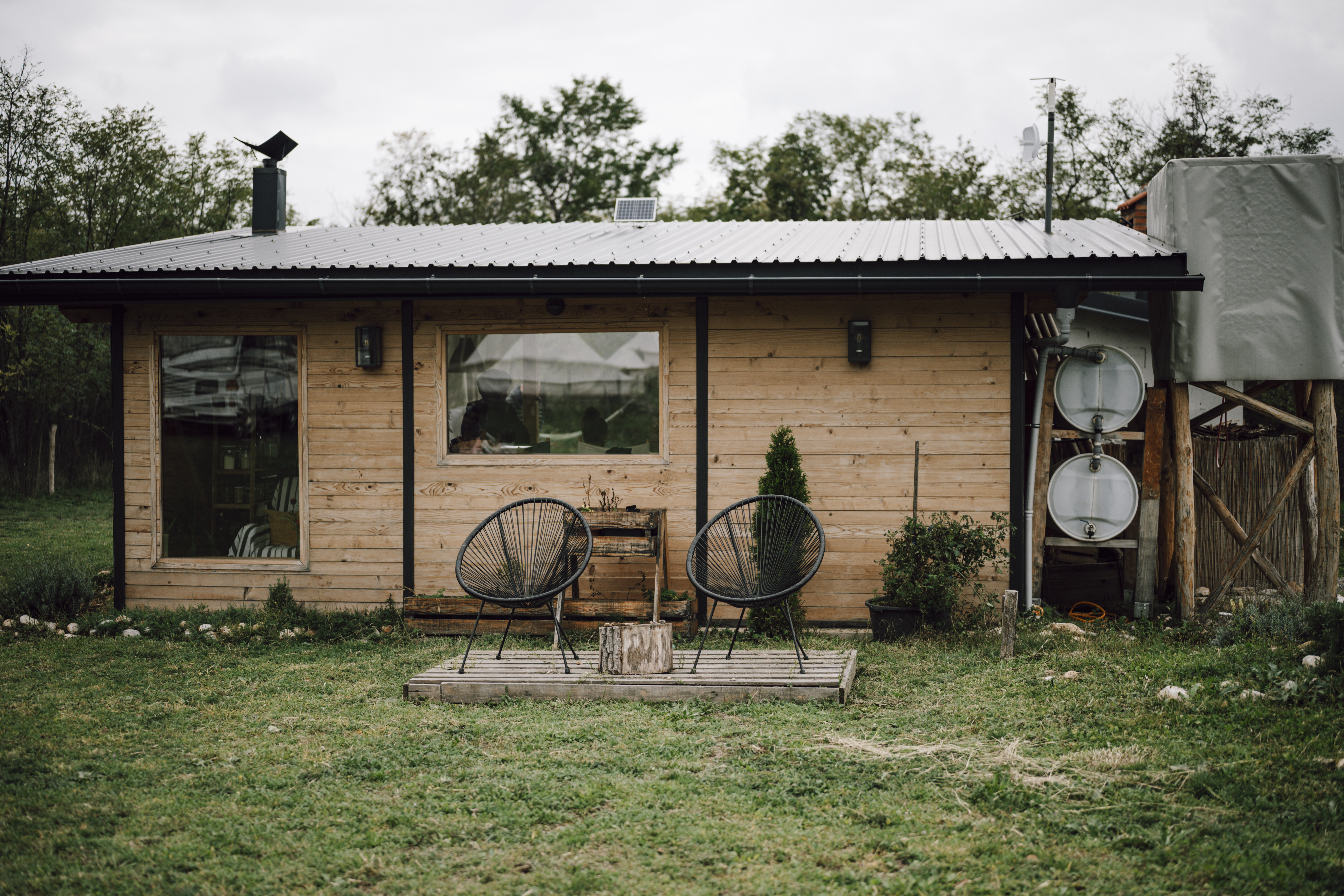
No more than a conventionally built house. What sets the workload is not that it was made in a factory, but what the house is made of and, above all, what it has on the outside. Here you will find what each type needs, how often, and what to ask before buying so you know what you are signing up for.
Quick answer
If the timber is exposed on the outside, its protective finish is renewed every 4 to 10 years, depending on the sun and rain it gets.
A timber house does not always show timber: if it is clad in fibre cement, render or external insulation (ETICS), what you look after is that façade.
Concrete and steel (steel frame) need little: a yearly check of roof, gutters and joints. Steel only rusts if moisture stays trapped inside the wall.
Container: rust is checked every six months (every three near the sea) and the paint is fully redone every 8 to 10 years.
In Spain, keeping the house in good condition is the owner's legal duty, and the legal guarantee may not cover damage that comes from not doing so.
| Type of house | How often | What is done |
|---|---|---|
| Exposed timber | Protective finish, every 4 to 10 years | Open-pore stain or protective finish |
| Clad timber | Depends on the cladding | Check the façade and its joints |
| Concrete | No fixed schedule | Seal cracks and joints |
| Steel (steel frame) | Seals, every 3 to 5 years | Renew seals; watch for moisture |
| Container | Rust, every 6 months; paint, every 8 to 10 years | Treat rust; control condensation |
One check a year, whatever the type
Any house, prefab or conventionally built, needs a check once a year: the roof, the gutters and downpipes, and the joints and seals of doors and windows. Use it to look for damp patches inside as well.
It is the task that pays off most, because water that gets in unseen is what shortens a house's life the most. Everything else depends on the material and, above all, on what the house has on the outside. How long each type lasts with this care is in how long a prefab house lasts.
Exposed timber: the protective finish, every few years
If the timber is left exposed, its outer protective finish is renewed every 4 to 10 years. The Spanish association of timber house manufacturers (AFCCM) and AMYC speak of 4 to 5 years with an open-pore stain (lasur); GoPrefabricadas gives 5 to 10, depending on how exposed the house is. The façade that gets the most sun, rain and wind is the one that needs it first.
- Every year: outer finishes, joints and seals.
- Every decade: a check of the structure.
- Always: watch for damp and for signs of wood-boring insects.
The factory treatment against fungi and insects is not repeated. More in timber prefab houses.
Not every timber house needs staining: it depends on what it has on the outside
Timber can be the structure without being the façade, and what you maintain is the façade. If it is clad in fibre cement, render or external insulation (ETICS, an insulation layer on the outside with its own finish), there is no timber to treat.
- The Vitoria by Daype (in Spanish) is sold with pine boards and one coat of stain, or with Canexel or fibre cement, which the manufacturer describes as maintenance free: the same house with two schedules.
- The Duero by American Building System (in Spanish) covers its timber walls with ETICS and single-coat render or cement boards.
- The other way round, the Lara 102 by SORT-7 (in Spanish) has a steel frame and stained fir boards on the outside: that one does follow the timber schedule.
A timber porch or shutters still need their protective finish. Ask what is on the outer face of the wall.
Concrete: seal before water gets in
Concrete needs very little: it does not rot, insects do not attack it and it has no fixed schedule. The job is to leave water no way in.
- Clean and seal the façade so that damp and mould do not build up.
- Seal cracks and joints as soon as they appear: that is how water reaches the steel inside, which is what really damages it.
- Check the roof waterproofing during the yearly check.
Brands that work with this system are in concrete prefab houses.
Steel (steel frame): the structure is not painted, it is kept dry
The steel in a steel frame is galvanised and sits inside the wall, so it is not painted: it is kept dry. For it to rust, moisture has to stay trapped inside, from a leak or from condensation.
- Every year: clean gutters and downpipes, check flashings and the edges of doors and windows, and make sure there are no damp patches inside.
- Every 3 to 5 years, renew outer seals that have aged and go over paint, cladding and the fit of doors and windows.
- Always: make sure the vapour barrier and ventilation keep doing their job.
Near the sea, salt wears the galvanising away faster. More in steel prefab houses.
Container: rust, every six months
A container house is steel exposed to the weather, and it is the one that needs most watching. Rust starts at the weak points: welds, corners, door frames and the corrugated roof.
- Every six months, a rust check; every three if it is near the sea, and always after a storm.
- Every 5 to 10 years, a thorough inspection.
- Every 8 to 10 years, a full repaint: epoxy primer and a polyurethane or marine enamel finish, with extra coats on edges and welds.
- Always: insulation, vapour barrier and ventilation, so that condensation does not stay inside, because steel does not breathe.
Options in container houses.
What the law and the guarantee expect from you
In Spain, the Building Act (Ley de Ordenación de la Edificación) requires the owner to keep the house in good condition through proper use and maintenance.
- Ask for the building logbook (libro del edificio). If the house is real estate (with a project and a permit), it is handed over when the works finish, with the instructions for use and maintenance: that is your schedule.
- Keep the invoices. The legal guarantees (10 years for the structure, 3 for habitability and 1 for finishes) do not cover damage caused by the owner, and maintenance that was never done can fall under that.
- The manufacturer's guarantee is separate: SORT-7, for example, hands over its guarantee certificate with maintenance rules. Ask for them in writing before signing.
Before choosing, ask what the house has on the outside and what maintenance its guarantee requires: with those two answers you know how much work you are taking on. Then compare models and manufacturers on Moduly Homes.
Frequently asked questions
How often should a timber house be stained?
Every 4 to 10 years, if the timber is exposed. AFCCM and AMYC speak of 4 to 5 years with an open-pore stain, and GoPrefabricadas gives 5 to 10 depending on how exposed it is. The façade that gets the most sun and rain is the one that needs it first, so check it every year.
Do all timber houses need staining?
No, only those that show timber on the outside. If the house is clad in fibre cement, render or external insulation (ETICS), what you maintain is that façade, even if the structure is timber. Some manufacturers sell the same house with both finishes: ask before choosing, because it changes the work of the years ahead.
Does the steel in a steel frame house rust?
Only if moisture stays trapped inside the wall. It is galvanised and protected by the wall build-up, so it is not painted: it is kept dry, with clean gutters, seals in good condition and a vapour barrier that works. Near the sea it is worth watching more closely.
How often should a container house be painted?
Fully, every 8 to 10 years, with an epoxy primer and a polyurethane or marine enamel finish. In between, check for rust every six months (every three near the sea), especially on welds, corners and roof, and treat it as soon as it appears.
Do I lose the guarantee if I skip maintenance?
You can lose part of it. The law requires the owner to keep the house in good condition, and those who built it are not liable for damage caused by the owner. Keep the invoices for what you do and ask in writing what maintenance the manufacturer's guarantee requires.
Does maintenance affect the lifespan of the house?
A lot. A container house, for example, lasts 20 to 30 years without major repairs and 25 to 50 with good maintenance, according to AMYC. And for timber, concrete and steel, the century their manufacturers speak of assumes that water stays out.
Sources
Most of the sources are official Spanish documents, in Spanish.
- 1Consumer (2008): mantenimiento de una casa de madera, con la recomendación de la AFCCM (lasur a poro abierto cada 4 o 5 años) · consumer.es
- 2AMYC: años que puede durar una casa prefabricada de madera (protección exterior, revisión anual y de la estructura) · amyc.es
- 3GoPrefabricadas: cuánto dura una casa prefabricada de madera (tratamientos cada 5 a 10 años) · goprefabricadas.com
- 4Hobycasa: qué mantenimiento necesita una casa de madera (sin plazo único: orientación y viento) · hobycasa.com
- 5Casas de Madera Daype: memoria de calidades (fachada de pino con lasur, o de canexel o fibrocemento) · casasdemaderadaype.com
- 6American Building System: memoria de calidades de la casa pasiva (muros de madera con SATE y acabado en monocapa o lamas de cemento) · abs.es
- 7SORT-7: modelo Lara 102 (abeto exterior con lasur y garantía con normas de mantenimiento) · sort-7.com
- 8The Concrete Home: mantenimiento de las casas prefabricadas de hormigón · theconcretehome.com
- 9Ecotown: diferencias entre casas prefabricadas de madera y de hormigón · ecotown.es
- 10Zar Servicios: durabilidad y mantenimiento del steel frame (tareas de cada año y de cada 3 a 5 años) · zarservicios.es
- 11ATEG. Ficha técnica sobre la norma UNE-EN ISO 14713 y la corrosión del acero galvanizado · ateg.es
- 12Silversea Containers: problemas de las casas contenedor · silverseacontainers.com
- 13Zarca: mantenimiento preventivo del óxido en contenedores marítimos (revisión cada 6 meses y repintado cada 8 a 10 años) · zarca.es
- 14AMYC: vida útil de una casa de contenedores · amyc.es
- 15BOE. Ley 38/1999 de Ordenación de la Edificación (artículos 7, 16 y 17) · boe.es